


 3 Min
In OTC

Follow this topic

Bookmark

Record learning outcomes
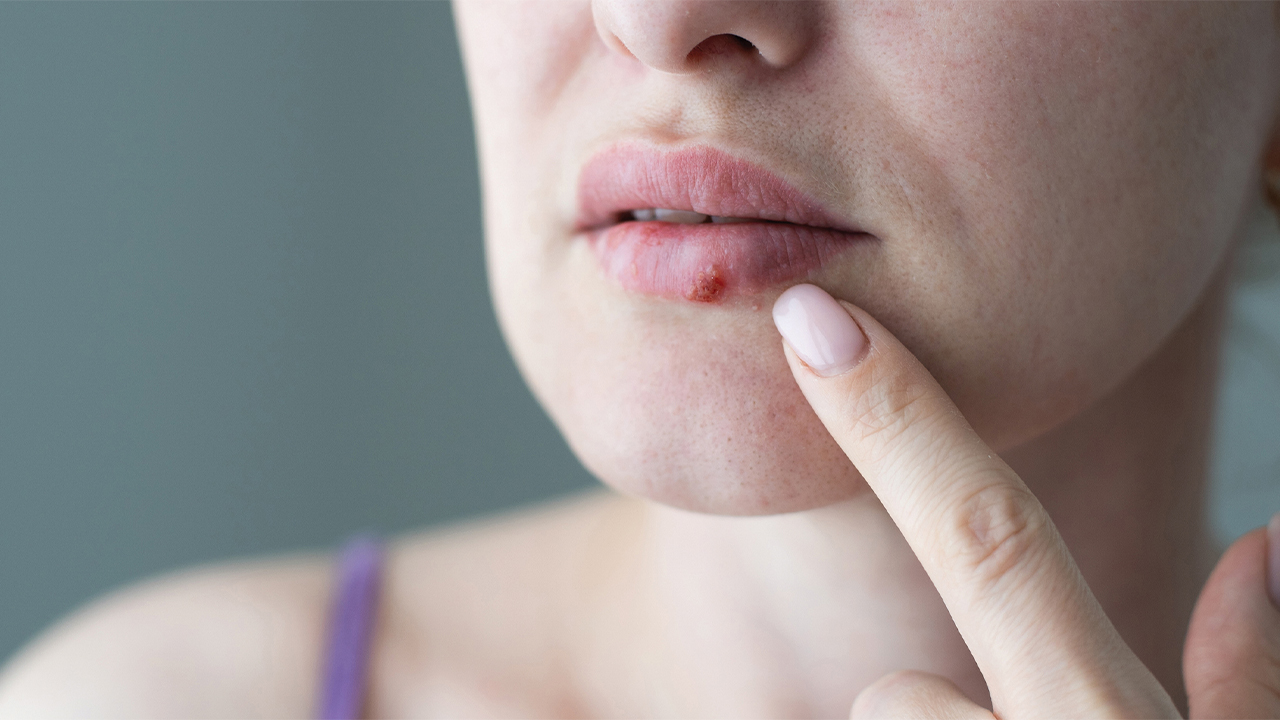
Cold sores are small, blister-like lesions that can appear anywhere on the face, but typically occur on the edge of the lips, chin or nose. They are caused by the Herpes simplex type 1 virus (HSV-1), which in most cases is caught in childhood. The virus travels up a nerve, where it lies dormant until it is triggered at a later date. Various things can activate the virus, including being ill, stressed or out in strong sunshine or cold weather. Cold sore outbreaks may also be linked to the menstrual cycle.
The first sign of a cold sore is usually a tingling or burning sensation. The skin then turns red and blisters develop. The blisters often fill with fluid and may weep and be tender or painful. It can take several days for the blisters to scab over and seven to 10 days for them to heal.
The fluid in the blisters contains the HSV-1 virus, so until they have healed, cold sores are infectious and the virus can spread to other people. Therefore, customers should not kiss or have skin-to-skin contact with others, particularly babies and those with a weakened immune system. Kissing a baby if you have a cold sore can lead to neonatal herpes, which is very dangerous to newborn babies.
Red flags
- Cold sores that have lasted for longer than 10 days
- Cold sores that have spread to other areas of the face, are very painful or look infected (e.g. have a yellow crust)
- Recurrent cold sores
- A large number of cold sores
- Customers with other symptoms, such as a fever or swollen glands
- Anyone who has a weakened immune system (e.g. from HIV or chemotherapy)
- Babies and infants.
What are the over-the-counter treatment options?
There’s no cure for cold sores but OTC treatments can help to hasten healing and relieve pain. These include:
- Antiviral creams (e.g. acyclovir) stop the virus from multiplying. They can prevent blisters from increasing in size and speed up healing time. They should be applied as soon as the tingling feeling appears, although they can be used on blisters that have already formed. Examples: Virasorb Cold Sore Cream, Zovirax Cold Sore Cream
- Patches containing hydrocolloid particles may help to soothe and heal cold sores as well as make them less visible. Example: Compeed Cold Sore Patch
- Other topical treatments containing local anaesthetics, astringents, antiseptics and moisturisers can help to relieve symptoms. Anaesthetics (e.g. lidocaine) help to relieve pain. Antiseptics (e.g. cetrimide) help to prevent further infection, and astringents or drying agents (e.g. zinc sulphate) can help to dry up the cold sore. Moisturisers (e.g. dimeticone) protect the skin
- Special heat therapy devices (e.g. Herpotherm Neo) may help to speed up healing, but are not suitable for everyone, so familiarise yourself with the devices your pharmacy stocks.
Whenever you talk to any customer, remember WWHAM:
Who is it for?
It may not be the customer who needs the treatment.
What are the symptoms?
Ask the customer to describe all of their symptoms so that you can establish the most appropriate treatment and determine whether they need to be referred to the pharmacist.
How long have the symptoms been present?
If cold sores have persisted for 10 days or more, refer the customer to the pharmacist.
Action already taken?
This will clarify whether the customer has used a product that hasn’t helped or wasn’t appropriate.
Medication?
It is important to find out whether the customer has a medical condition or is taking any prescribed or OTC medicines. Refer these customers to the pharmacist.
You don’t have to ask these questions in order, and a customer might give you some of this information without you asking. As long as you get them into the conversation, you should be able to find out the information you need in order to make a recommendation. The golden rule to remember is: if in doubt, refer to the pharmacist. Don’t be embarrassed to ask for their advice as they have a lot of information about products and symptoms to hand that you may not be aware of.
You can share the following advice with customers:
- Try not to pick the blisters or touch a cold sore, other than when applying topical products, to avoid causing more pain and spreading the virus
- Treatments should be gently dabbed on, not rubbed in
- Always wash hands after touching cold sores and applying treatments
- Do not share items that come into contact with cold sores, such as towels, lipsticks or cutlery
- If sunlight triggers cold sores, try using a lip balm with a sun protection factor of 15 or higher. Use a pot rather than a stick to prevent contamination
- Contact lens wearers should ensure hands are washed carefully before handling lenses as there is a risk of infecting the eyes with the virus
- Take paracetamol or ibuprofen to ease any pain or swelling.
Signposting
- NHS – Cold sores: nhs.uk/conditions/cold-sores

Share:


In OTC